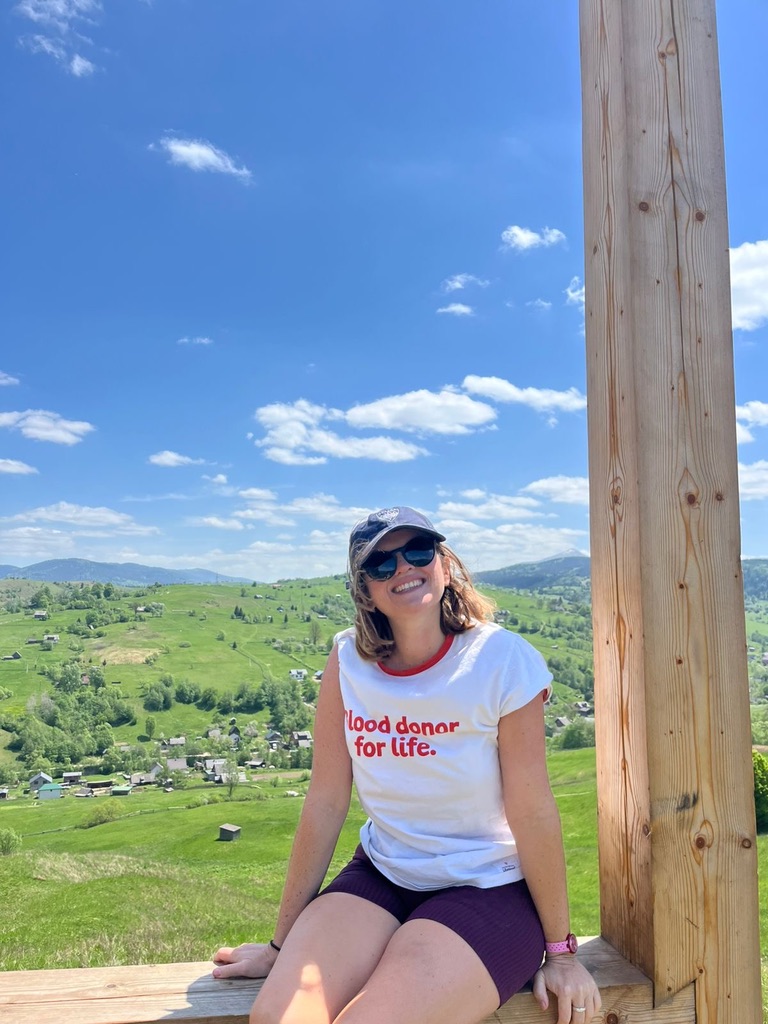
«Muscle pain in places I didn't know I had muscles». How Chloe from Ireland went looking for the reality of the war beyond her desk
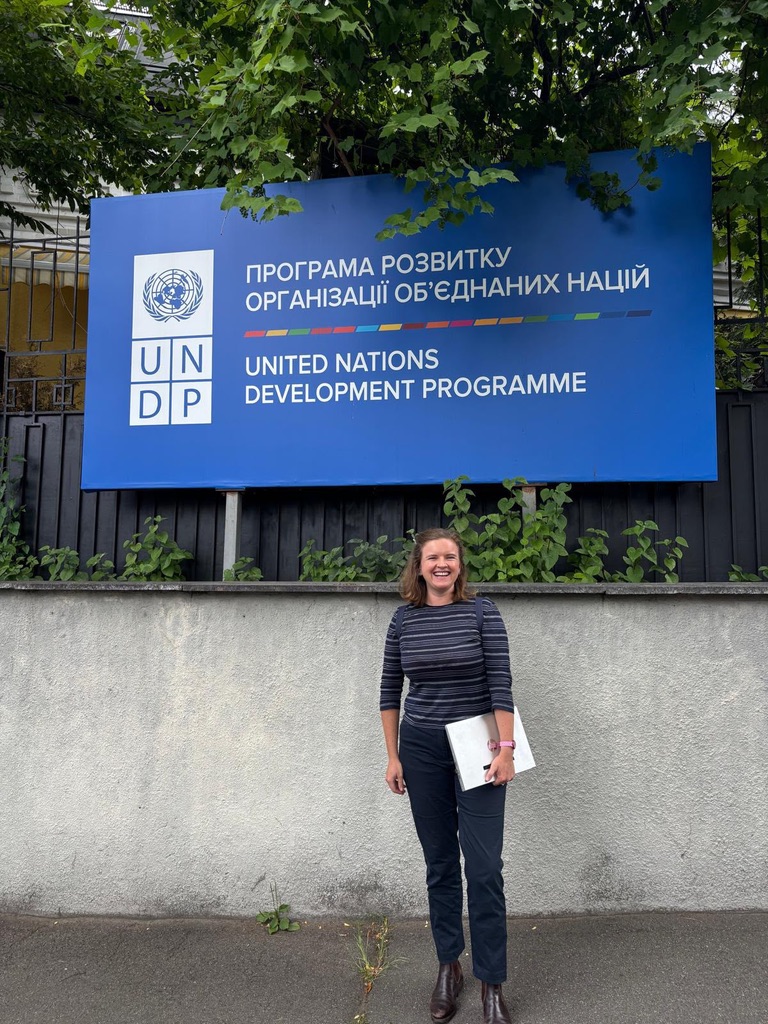
Chloe spent over a year in Kyiv leading a mine action project with the Government of Ukraine and UNDP. To see the war beyond her computer screen, she started coming to tolokas with Brave to Rebuild.
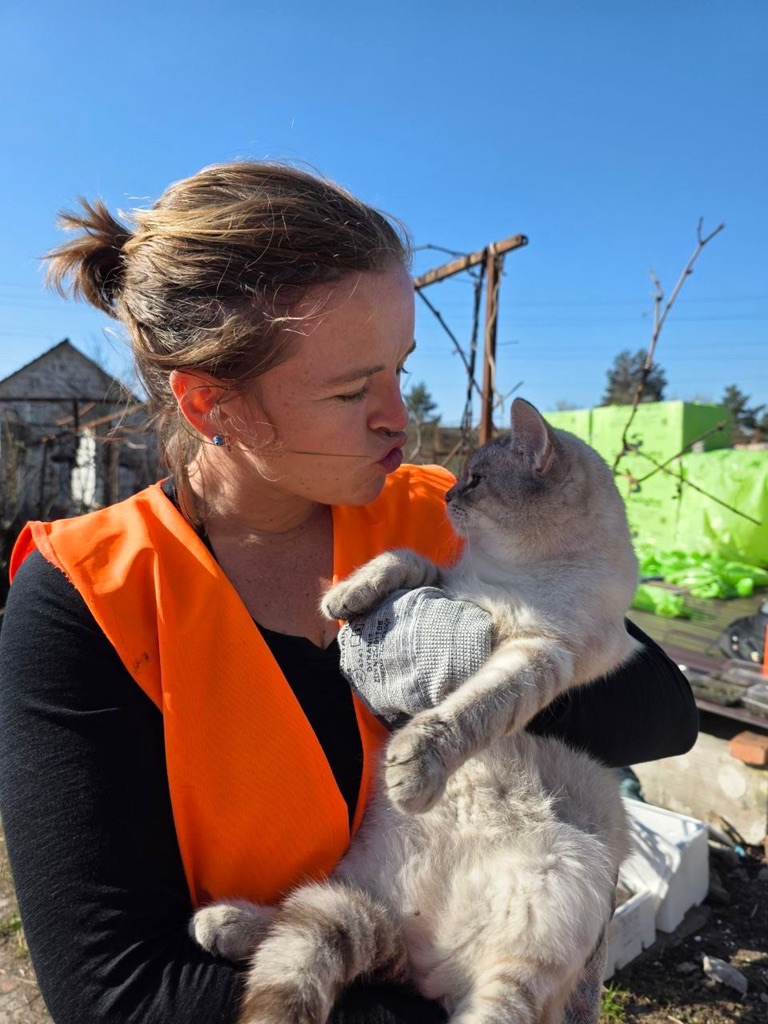
Chloe Dempsey, from Ireland and Australia, spent over a year in Kyiv working on mine action in Ukraine. But to see the reality of the war, she had to step away from her computer and come to tolokas.
A job about Ukraine, but far from it
Chloe advises governments on strategy and policy. In Kyiv she led a mine action project at the Tony Blair Institute with the Government of Ukraine and UNDP. The team worked with the government to strengthen its governance and impact of the demining sector.
But it was a desk job: meetings with government, international NGOs, embassies.
“It felt very distant from the reality of what Ukrainian people are experiencing through the war and the direct impact of Russian strikes. I wanted to get to know the people who care about rebuilding, who are doing it not because they're getting paid or wearing a nice suit in a public forum, but who are working on the ground.”
A community you can opt into
Volunteering is nothing new for Chloe. Wherever she has lived, she has found a way to connect with the place through volunteering. In Australia she was part of Big Help Mob, which gathered 50 to 100 people for a whole day of work that needs no special skills, such as planting trees. “Super similar to a toloka,” she says.
“To me, volunteering is about helping others, and at the same time realising that there are people out there who will help you. It is Ukraine's war, but it's a war for many other parts of the world too. It's just that Ukraine is facing it.”
In Kyiv, Chloe volunteered with several organisations. She found us on the Volunteering Ukraine website, and her first toloka with Brave was a bike repair day.
Expectations and reality
Before her first toloka, Chloe pictured Brave as a big, almost corporate organisation: you show up, someone tells you what to do, and you just work hard.
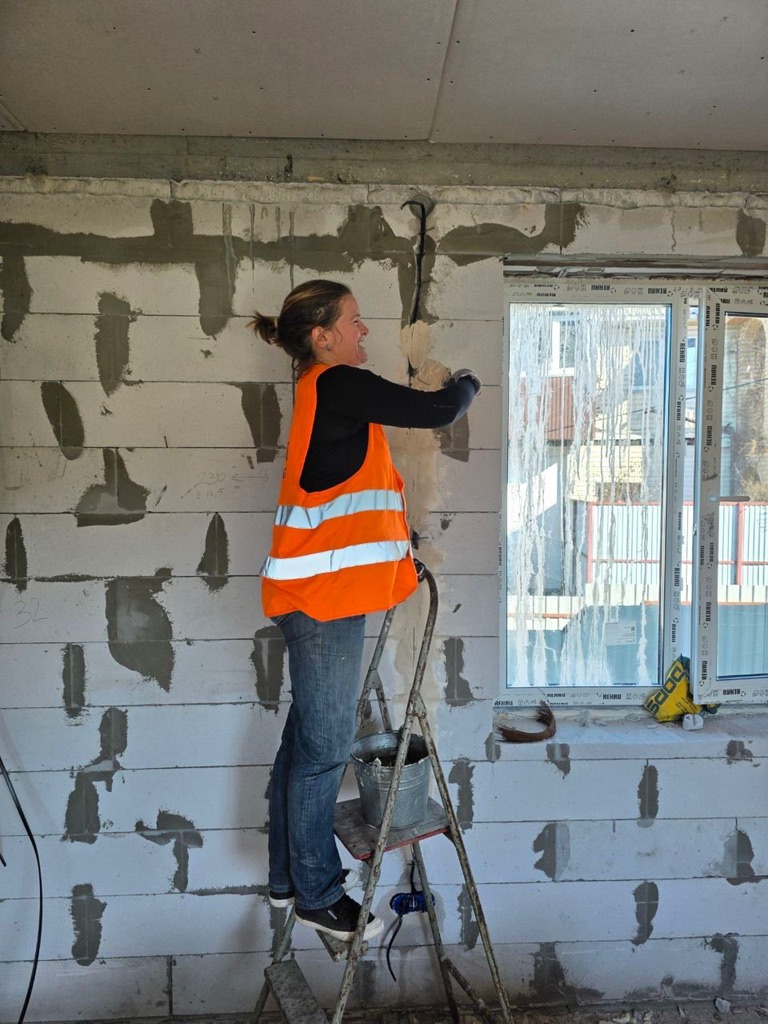
In reality, no specialist skills are needed. Someone has a skill and teaches it to others. Some volunteers have worked in construction, others learned everything on tolokas.
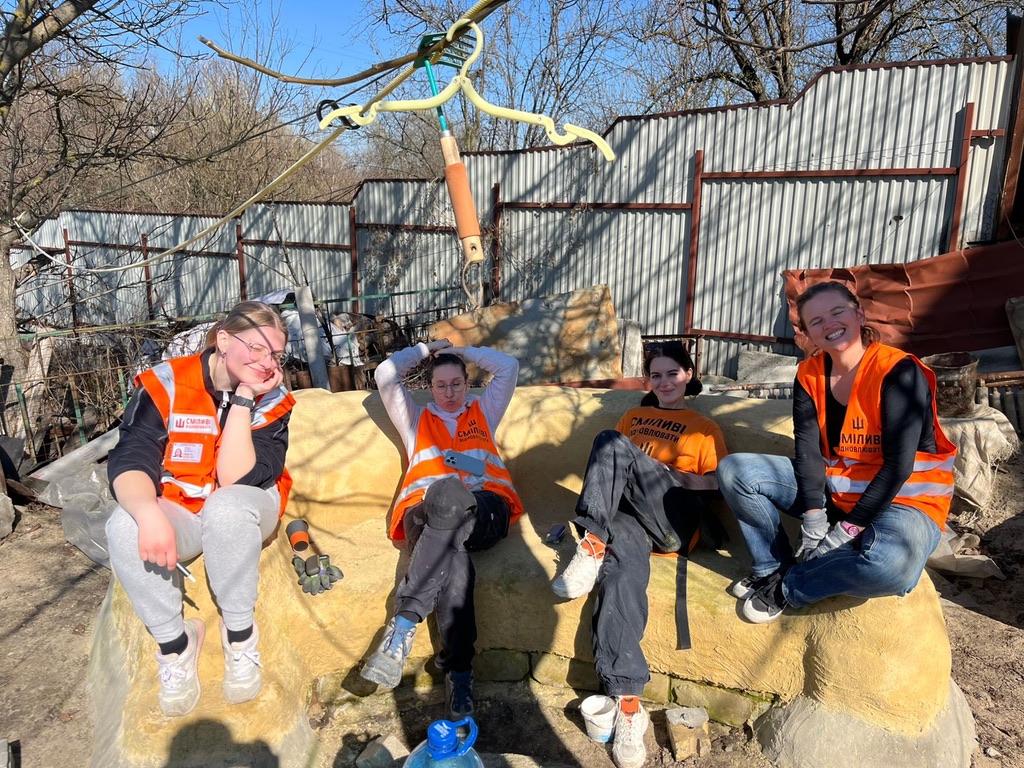
“It wasn't my expectation that it would be such a fun and social atmosphere. It really feels like a community event. I learned a lot, I did things I never did before.”
It's not real until you see it
The first time Chloe helped clear debris at an impact site, she had already lived in Kyiv for nine months. She followed the news and Telegram; colleagues lived close to impact sites. She thought she knew what it would be like.
“But it was shocking. To see just how destroyed the building was, and to meet the people who had just had their whole environment destroyed. It's not real until you see it.”
And at the same time, she says, it was inspiring. People who had just lost everything were already asking: okay, what are we going to do to solve this? Volunteers worked side by side and supported each other. “Sometimes everything is broken, but they are somehow still holding on.”
Stavyshche: the hardest and best weekend
Chloe's brightest memory is a weekend toloka in Stavyshche, outside Kyiv.
“I have never been so physically tired in my entire life. I felt muscle pain in places I didn't know I had muscles. But it was so fun.”
Everyone stayed in the same building. They worked hard all day, and in the evenings hung out with people they hadn't known before but somehow felt a connection with. Borscht was brought for lunch. “It's just normal borscht, but it tastes like the best borscht you've ever had,” Chloe says.
On that toloka, Chloe met an American woman who first came to Ukraine 30 years ago and had just moved from Lviv to Kyiv that very week. They got back on Sunday evening, and that night there was a really big strike. The next day her new acquaintance messaged her: “I'm really sorry, we just met and we don't really know each other. But can we have a call? I want to understand how you are dealing with this.” She is now one of Chloe's closest friends in Kyiv.
A few weeks later, when Chloe brought colleagues to donate blood at the military hospital, she ran into Adamo from our team, just by chance.
“To me, it's a sign that people are good. And that's what I think is the most valuable thing.”
Humour, resilience and warmth
In Kyiv, Chloe was struck by Ukrainians' dark sense of humour: even during everything that's happening, people make very clever, smart jokes, including about Russia. And by their resilience. The morning after a big attack, you can smell smoke in the air and see smoke still coming from a building not far away, and people are going about their lives.
“After a big attack, the sentiment was often: you think this is going to make us back down? Actually, it only makes people feel more passionate, more justified in the righteousness of the cause.”
On a few weekends, Chloe walked parts of the Camino Podolica, a 14-day walk in Western Ukraine. Once a couple picked her up on the road. They didn't speak English. They said they'd take her to the next town, but instead made her have lunch with them and talked for a long time about their son, who was her age and was killed fighting at the beginning of the war. Then they drove her to the train station and checked she had the right ticket. “The warmth is so genuine,” she says.
Advice for those thinking of coming
“You should come. But educate yourself first: why are you coming? Is this the best way you can help? Do your research, so that when you arrive you are actually helpful, and not a drain.”
Chloe advises reaching out to people who already volunteer, for example in our WhatsApp group: international volunteers are usually very passionate and happy to share their experience and tips.
Join us
Volunteers from Ukraine and all over the world help families rebuild their homes with Brave to Rebuild. No experience required: we'll teach you everything on site.